
In the Peruvian desert lies a mystery that defies the passage of time. Lines stretching for kilometers, gigantic symbols, and figures that appear to have been drawn to be viewed from the sky. Are they merely ritual creations of an ancient civilization, or traces of knowledge that humanity has lost?
1. A Gigantic Message Engraved on the Earth's Surface
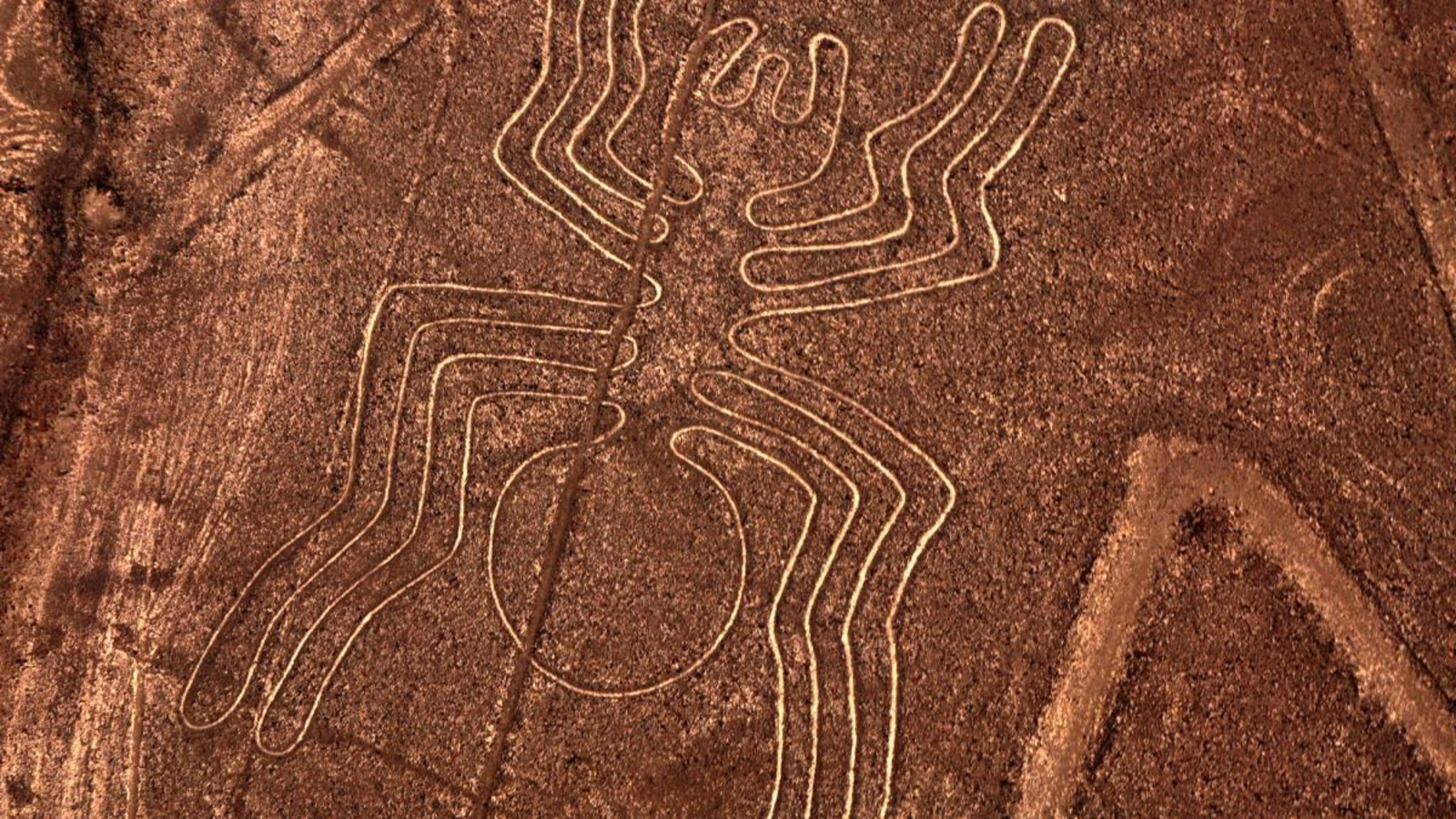
In southern Peru, the Nazca Desert conceals one of the most enigmatic monuments of the ancient world. Hundreds of geometric figures, animals, birds, spirals, and precisely drawn lines cover enormous areas. Some stretch for kilometers, while others form images that are most easily recognized from the air.
Created approximately 2,000 years ago, these geoglyphs raise a fascinating question: Why would a civilization create drawings so enormous if their true shapes could only be fully appreciated from above?
Archaeological explanations show that the Nazca people could have created such figures using ropes, stakes, and measuring techniques. But being able to explain the method does not automatically mean we have deciphered the intentions of their creators.
2. Visitors from the Sky and the Extraterrestrial Contact Hypothesis
One of the most provocative theories suggests that the Nazca Lines could represent traces of contact between ancient civilizations and intelligences originating beyond Earth.
Writer Erich von Däniken popularized the idea that some of the geometric formations resemble runways intended for flying craft. According to this interpretation, the drawings may have served as signals, markers, or representations dedicated to beings regarded as gods.
Numerous ancient traditions contain accounts of entities descending from the sky, divine teachers, and beings who transmitted knowledge to humanity. Could there be a symbolic connection between these traditions and Nazca?
There is no confirmed evidence of an extraterrestrial presence on the plateau. Nevertheless, the hypothesis invites us to explore a deeper question: If some myths about gods descending from the heavens were inspired by real events, how could we recognize them today?
3. Nazca – A Place of Communication with Unseen Dimensions?
From a spiritual perspective, the lines can be interpreted as symbols of the connection between the material world and the invisible realm.
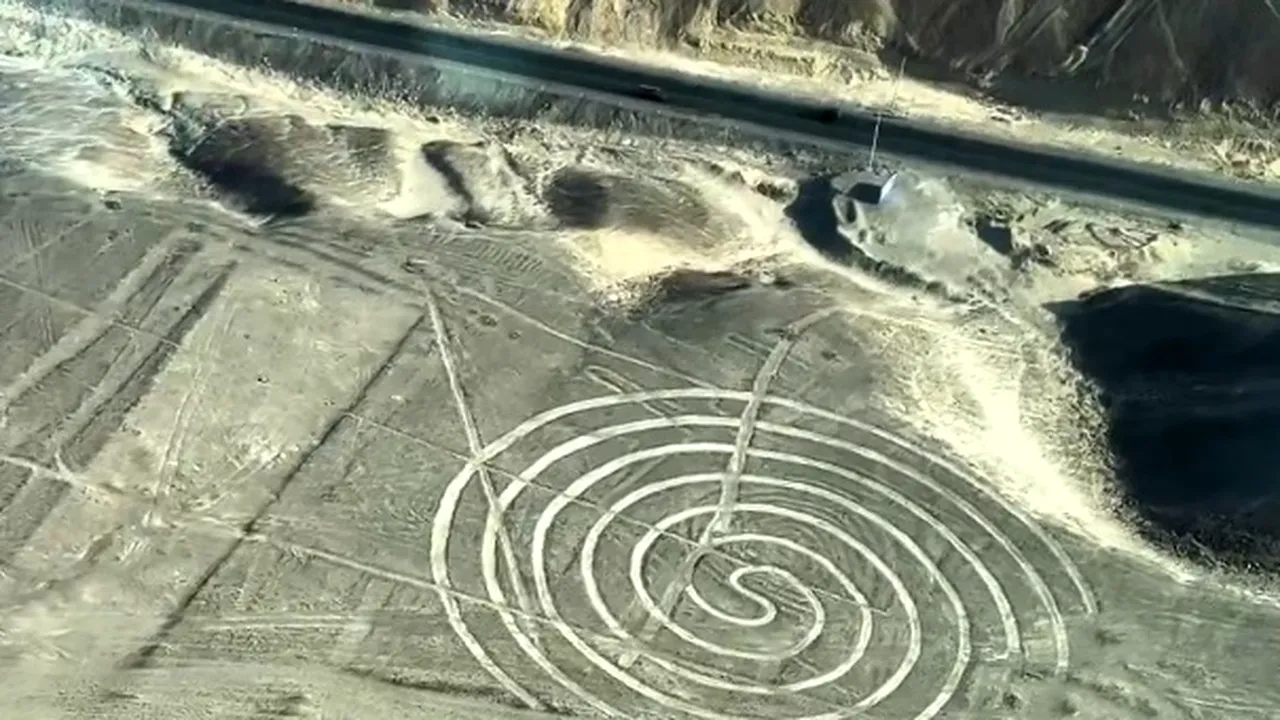
In numerous esoteric traditions, sacred geometry represents the order of the universe. Circles, spirals, and lines are symbolically associated with the cycles of existence, the transformation of consciousness, and the relationship between humanity and the cosmos.
If the Nazca Plateau was a ceremonial space, the figures may have represented more than decorative images. They could have formed a ritual language intended for deities, ancestors, or entities considered superior.
An esoteric interpretation goes even further: Nazca may have functioned as a symbolic map of cosmic energies, in which geometry, orientation, and ritual movement shared a common significance.
This possibility belongs to spiritual interpretations rather than scientifically demonstrated conclusions, but it offers a different perspective on the monument.
4. The Connection Between Nazca, the Stars, and Lost Knowledge
Researcher Maria Reiche believed that certain lines might have astronomical significance, being oriented toward important celestial events.
In ancient traditions, observing the sky was not separate from spirituality. The movements of the Sun, Moon, and stars could be viewed as manifestations of a cosmic order.
But what if Nazca represented an attempt to reproduce that order on Earth?
Some alternative interpretations suggest that the figures may encode astronomical information or messages passed down through generations. Others propose the existence of spiritual knowledge older than the Nazca culture itself.
So far, there is no evidence that the entire complex forms a star map or that it originated from an unknown civilization. However, the relationship between astronomy, rituals, and geometry remains a fascinating field of exploration.
5. Recent Discoveries Show That the Mystery Is Far from Solved
In 2024, researchers from Yamagata University, using artificial intelligence and field investigations, identified 303 new figurative geoglyphs in the Nazca region.
Among them are representations of humans, animals, and other unusual symbols. The discovery significantly changed researchers' understanding of the scale of the entire complex.
If hundreds of figures remained undiscovered until the age of artificial intelligence, how many other symbols might still lie hidden beneath the desert sands?
And, more importantly, could future discoveries change current interpretations of the purpose of this place?
6. A Code for Consciousness or a Legacy of the Gods?
Viewed through the lens of spirituality, the Nazca Lines may suggest that ancient humans did not consider material reality to be the only form of existence.
Perhaps the figures were prayers engraved into the earth. Perhaps they represented attempts to communicate with deities. Or perhaps they symbolized a profound relationship between human consciousness and the universe.
Theories involving extraterrestrial visitors, lost civilizations, and cosmic knowledge are not confirmed by the available evidence. Yet the existence of these interpretations reflects a question that has accompanied humanity for millennia: Are we alone in the universe, and how much do we truly understand about our own history?
Conclusion – Who Was Meant to See the Nazca Lines?
Perhaps the most important question is not who drew these lines, but to whom they were addressed.
To humans? To gods? To the heavens? Or to future generations destined to discover their message?
Nazca remains a place where archaeology, astronomy, spirituality, and theories about extraterrestrial civilizations intersect. Some explanations are supported by concrete discoveries, while others remain speculative possibilities.
One thing, however, is certain: those who created these figures wanted to leave something lasting behind. And nearly two millennia later, humanity is still trying to understand their message.
If the Nazca Lines were created not merely to be seen, but also to communicate something, have we learned how to read them?
Sources and Documentaries
- UNESCO – Lines and Geoglyphs of Nasca and Palpa
https://whc.unesco.org/en/list/700/
- National Geographic – Nazca Lines
https://www.nationalgeographic.com/history/article/nasca-lines
- Yamagata University – Discovery of 303 Geoglyphs Using Artificial Intelligence (2024)